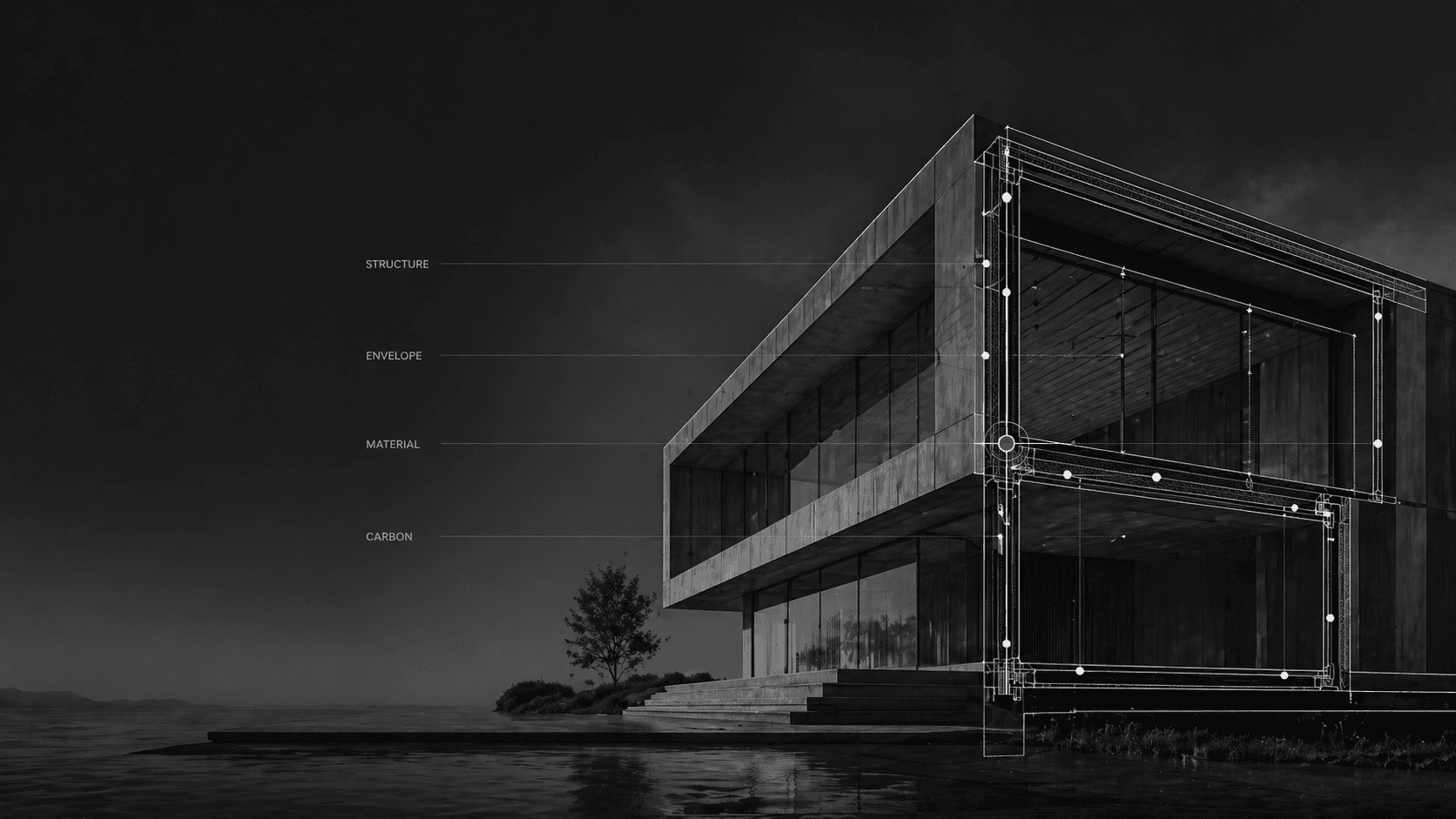
Applied System
Embodied Carbon
From repeated carbon analysis to predictive design intelligence.
Carbon becomes comparable before design is fixed — enabling decisions when they still matter.
01 — PROJECT
Moving sustainability from downstream analysis into everyday design decisions.
Used in live early-stage workflows — shifting sustainability from compliance to design direction.
Applied System
Design Intelligence
Carbon Index · Embodied Carbon
2021
Global
02 — THE OPPORTUNITY
Sustainability doesn't become business-as-usual by adding another tool. It becomes business-as-usual when it is embedded into how an organisation works.
Problem
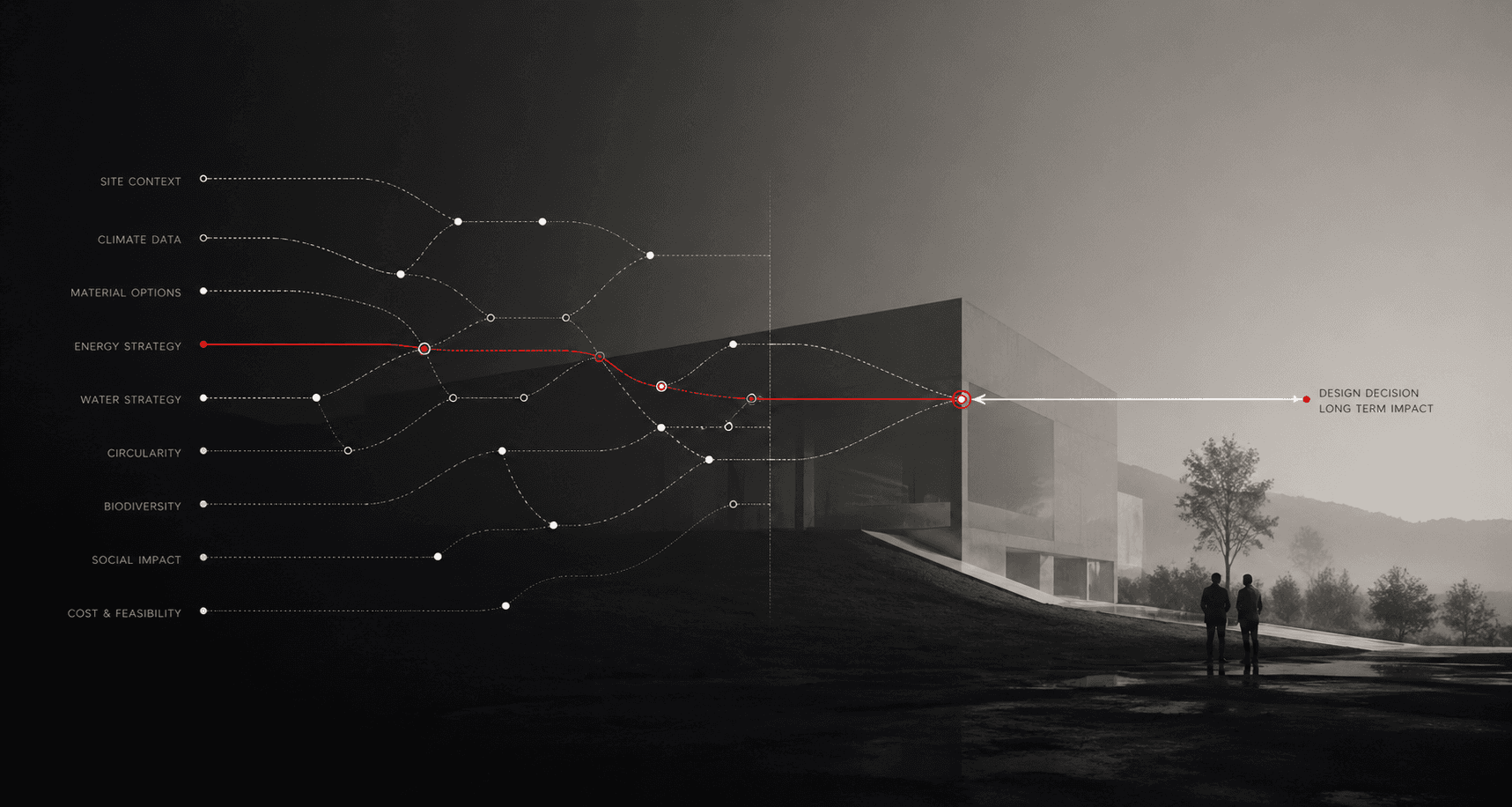
Sustainability was often arriving after the decisions that mattered.
Design teams were making decisions about geometry, materials and assemblies before their environmental consequences became visible.
Analysis could identify problems — but often after design direction had already begun to converge.
The challenge was not simply producing more sustainability data.
It was getting useful intelligence to the designer early enough to change the outcome.
Insight
A body of applied work focused on making environmental performance visible earlier — while design direction, materials and systems could still be influenced.
Opportunity
FROM: Analysis after design
TO: Intelligence during design
FROM: Specialist sustainability workflows
TO: Sustainability embedded into delivery
FROM: Understanding impact
TO: Influencing the decision that creates it
03 — WHAT WE BUILT
04 — FROM INSIGHT TO IMPACT
The change
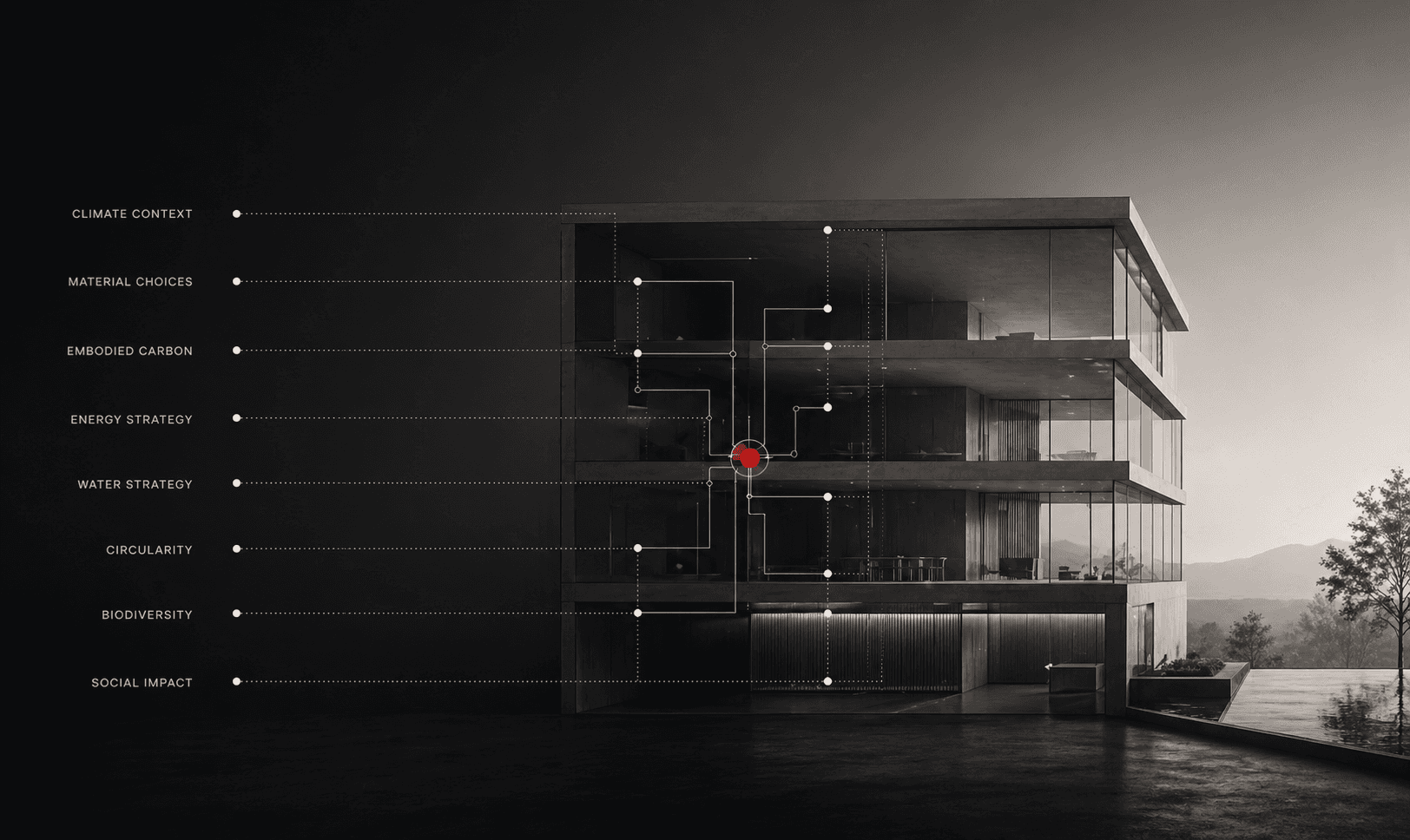
Sustainability closer to the point of decision.
EARLY DESIGN Environmental feedback introduced while design direction was still fluid — helping teams compare options before committing to them.
EMBODIED CARBON Carbon intelligence connected to materials and assemblies, making the impact of alternative choices easier to understand.
BUSINESS-AS-USUAL CARBON Indicative carbon impact designed to work quietly in the background as designers design — reducing the need for separate analysis to understand every decision.
INTEGRATED WORKFLOWS Sustainability connected into existing digital design and delivery workflows rather than operating as a parallel specialist activity.
Designed around how teams actually work.
Across customer engagements, prototypes and live workflows, the work focused on reducing the gap between designing something and understanding its impact.
It enabled teams to:
Compare earlier while meaningful design alternatives still existed.
See trade-offs between design intent, performance and environmental impact.
Reduce friction by bringing sustainability closer to existing workflows.
Make better-informed decisions without requiring every designer to become a sustainability specialist.
IMPACT: Sustainability moved upstream — shaping design decisions, not simply validating them.
05 — WHAT IT DEMONSTRATES
Sustainable Integrated Digital Delivery
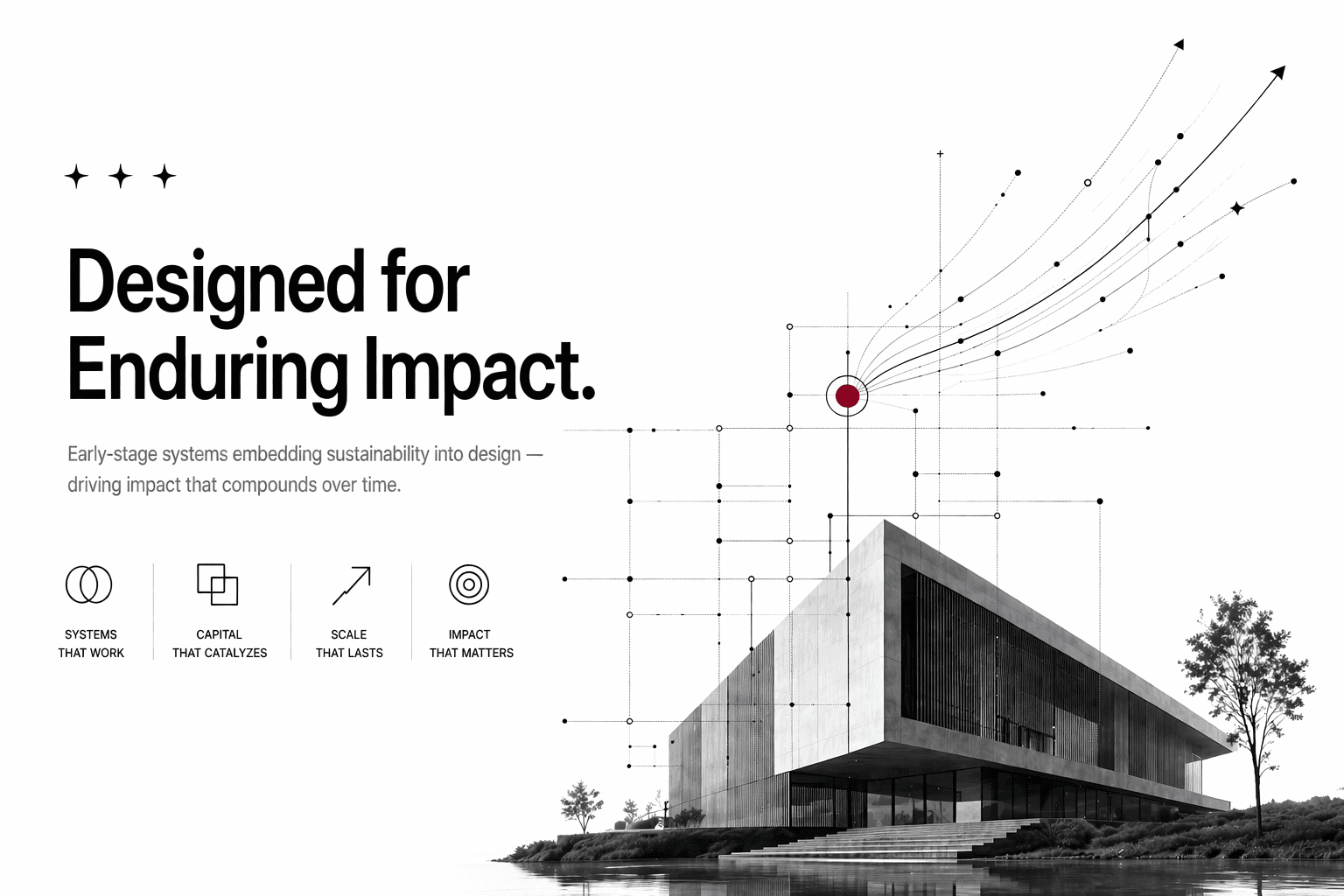
If it shows up after the decision, it was never part of the design.
Professional work
Developed through professional industry roles and collaboration. Presented here as evidence of 0→1 innovation practice.
Applied System
From repeated carbon analysis to predictive design intelligence.
Carbon becomes comparable before design is fixed — enabling decisions when they still matter.