01 — PROJECT
Embodied Carbon
From repeated carbon analysis to predictive design intelligence.
Carbon becomes comparable before design is fixed — enabling decisions when they still matter.
Applied System
Carbon
Carbon Index · Embodied Carbon
2022
02 — THE OPPORTUNITY
The opportunity
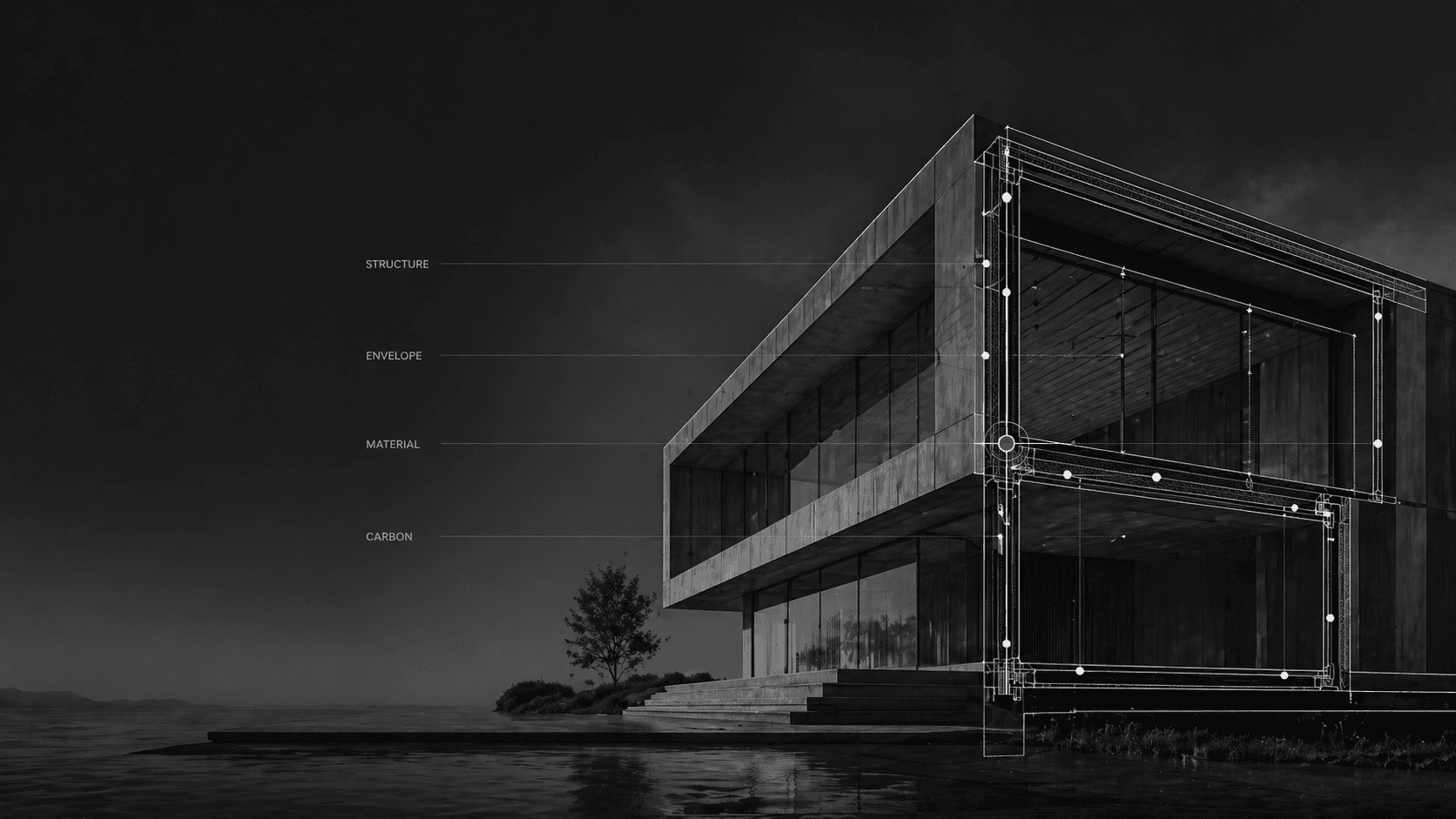
Carbon doesn't need to be recalculated to inform every decision. It can be predicted.
Detailed life-cycle assessment remains essential.
But designers make hundreds of decisions before that level of analysis is practical or proportionate.
If carbon knowledge can be structured, standardised and made comparable, it can provide indicative intelligence earlier — helping designers understand the likely consequence of a choice while alternatives still exist.
Problem
Valuable carbon knowledge was being generated — then repeatedly recreated.
Read the full context
Embodied-carbon assessment is typically specialist, project-specific and dependent on detailed information.
That works for analysis.
It works less well for everyday design decisions.
Every project generates knowledge about materials, assemblies and their relative impact, yet much of that intelligence remains locked within individual assessments.
The opportunity was to turn that knowledge into something reusable, predictive and accessible to designers.
Insight
The predictive Carbon Index (pCI) was developed to make embodied carbon usable during everyday design — turning previous analysis and material intelligence into predictive, comparable guidance at the point of decision.
Read the full context
Built as a pathway from service → technology → product enhancement, pCI explored how carbon knowledge could become reusable rather than recalculated from scratch for every design decision.
Opportunity
BUSINESS-AS-USUAL CARBON
Read the full context
What if the designer didn't have to think about running a carbon analysis at all?
The next step pushed the idea further.
Instead of requiring designers to stop, select a sustainability workflow and perform an assessment, indicative carbon intelligence could operate quietly in the background as they designed.
The designer remains the designer.
The system interprets the design and surfaces relevant carbon intelligence when it matters.
This moved pCI toward a different relationship between sustainability and technology:
from a tool designers have to use → to intelligence embedded within the tools they already use.
03 — WHAT WE BUILT
What we built


04 — FROM INSIGHT TO IMPACT
From insight to impact
The change
predictive Carbon Index (pCI)
Read the full context
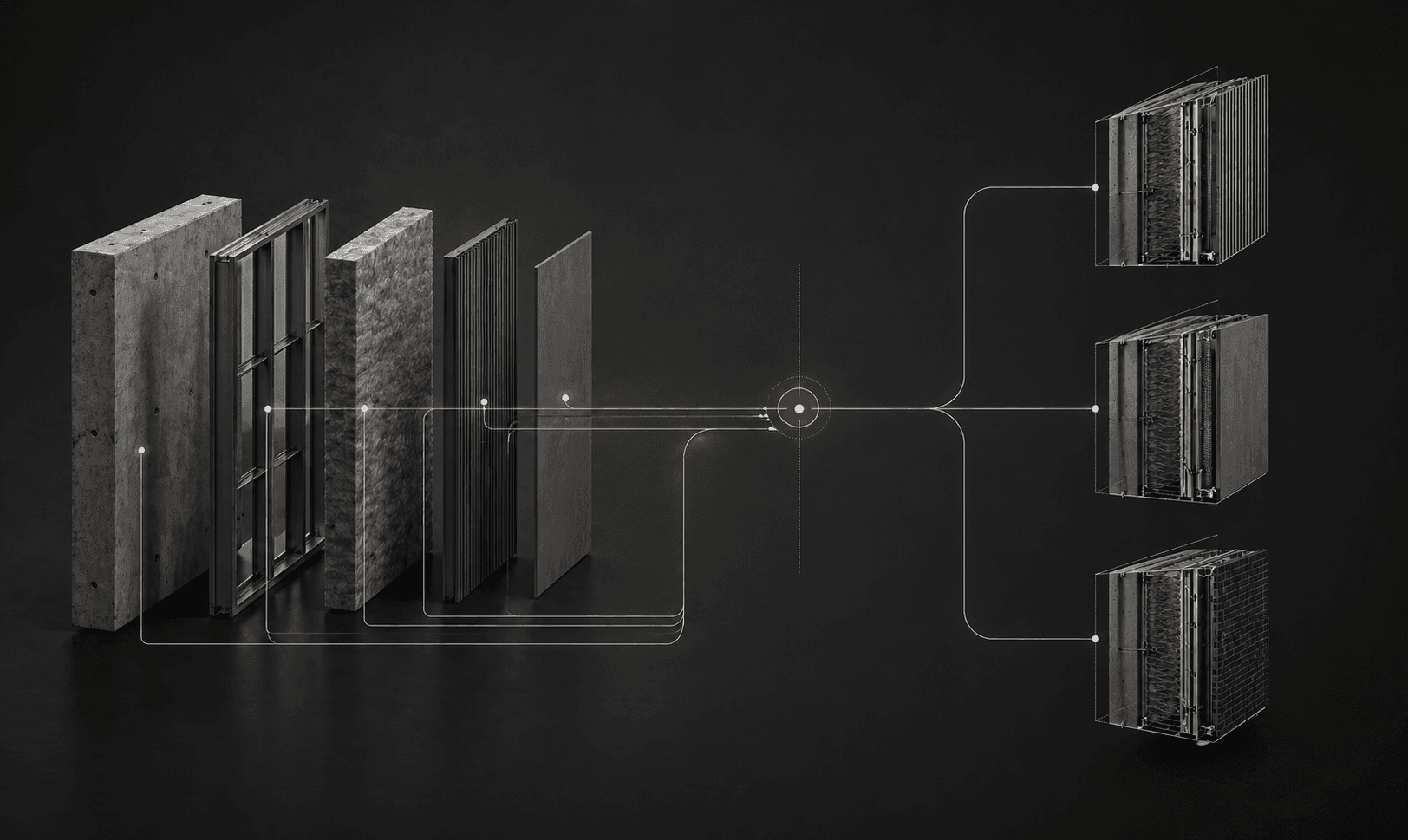
pCI transformed embodied-carbon information into a structured system of comparable design intelligence.
Rather than requiring a complete calculation for every choice, representative materials and assemblies could be assessed, normalised and indexed to provide an indicative basis for comparison.
The service typically developed 15–20 relevant assemblies around an organisation's own design context — creating a reusable intelligence library supported by guidance, training and application.
Walls · Floors · Roofs · Facades · Structural systems
Not a replacement for detailed LCA.
A way to make carbon useful before detailed LCA is needed.
The service created the intelligence. Technology made it scalable. pCI was designed as more than a one-off consultancy intervention. The service created structured carbon knowledge specific to the organisation. That knowledge could then become a reusable digital asset. SERVICE Analyse → Standardise → Build intelligence → Validate → Enable teams ↓ TECHNOLOGY Structure → Connect → Compare → Surface intelligence in the workflow ↓ PRODUCT ENHANCEMENT Carbon guidance becomes available directly where design decisions happen. The pathway turned repeated professional knowledge into something that could increasingly be delivered through technology.
Prediction needed a common language.
Read the full context
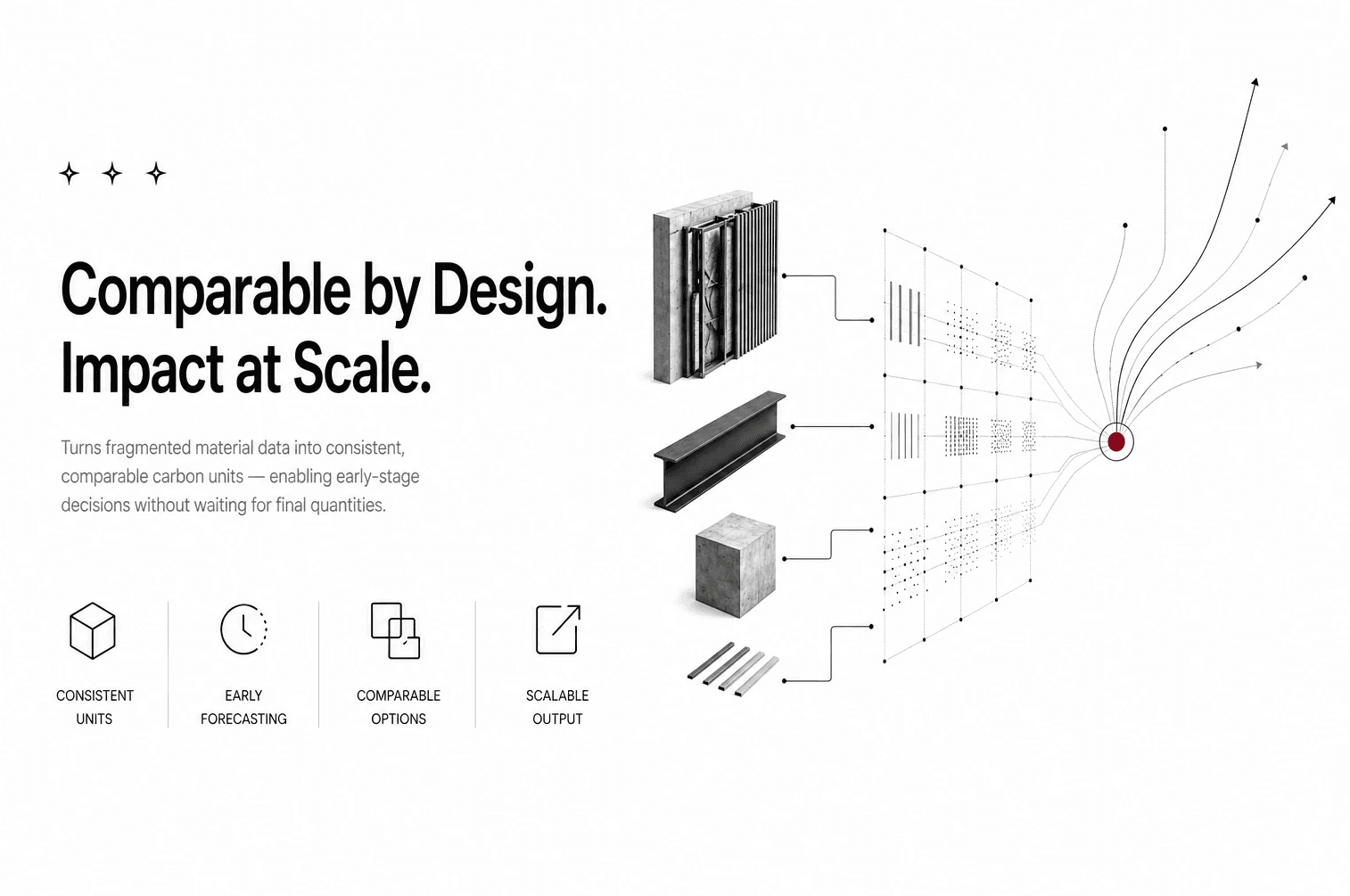
Different design options cannot provide meaningful intelligence unless they are compared consistently.
pCI established standardised comparison units according to the type of element:
AREA A consistent sample area for walls, floors, facades and other surface-based assemblies.
LENGTH A consistent linear unit for beams, pipes, reinforcement and other length-based elements.
VOLUME A consistent volumetric unit for materials such as concrete, insulation and soil.
Much like comparing fuel efficiency between vehicles, the objective was not to recreate every real-world condition.
It was to establish a consistent basis for understanding relative performance.
IMPACT: Carbon shifted from something calculated after a decision to intelligence capable of informing the decision itself.
05 — WHAT IT DEMONSTRATES
What it demonstrates
IN PRACTICE
Read the full context
pCI created a repeatable way for organisations to build and apply their own embodied-carbon intelligence.
It enabled teams to:
Compare earlier Understand the relative impact of materials and assemblies before specifications were fixed.
Reuse knowledge Turn previous analysis into intelligence that could inform future decisions.
Reduce friction Provide useful carbon guidance without requiring detailed assessment at every decision point.
Build capability Create organisational carbon knowledge rather than leaving expertise isolated within individual projects.
Create a pathway to technology Turn a service-generated methodology and dataset into scalable digital capability.
THE OUTCOME
From calculating carbon to building carbon intelligence.
pCI demonstrated how a sustainability service could become more than a repeatable consulting offer.
The service generated the methodology, structured knowledge and validation.
Technology created the opportunity to scale it.
Product integration moved that intelligence closer to the designer.
SERVICE → INTELLIGENCE → TECHNOLOGY → PRODUCT
The result was a pathway toward embodied carbon becoming part of business-as-usual design — available early enough to influence choices without replacing the detailed analysis required later.
THE SHIFT
FROM: Repeated carbon calculation
TO: Reusable predictive intelligence
FROM: Project-specific knowledge
TO: Organisational carbon knowledge
FROM: Specialist analysis
TO: Designer-accessible guidance
FROM: Standalone sustainability workflows
TO: Intelligence embedded into design technology
Don't calculate every decision. Build intelligence that helps predict the better one.
Professional work
Developed through professional industry roles and collaboration. Presented here as evidence of 0→1 innovation practice.