Innovation-Engine
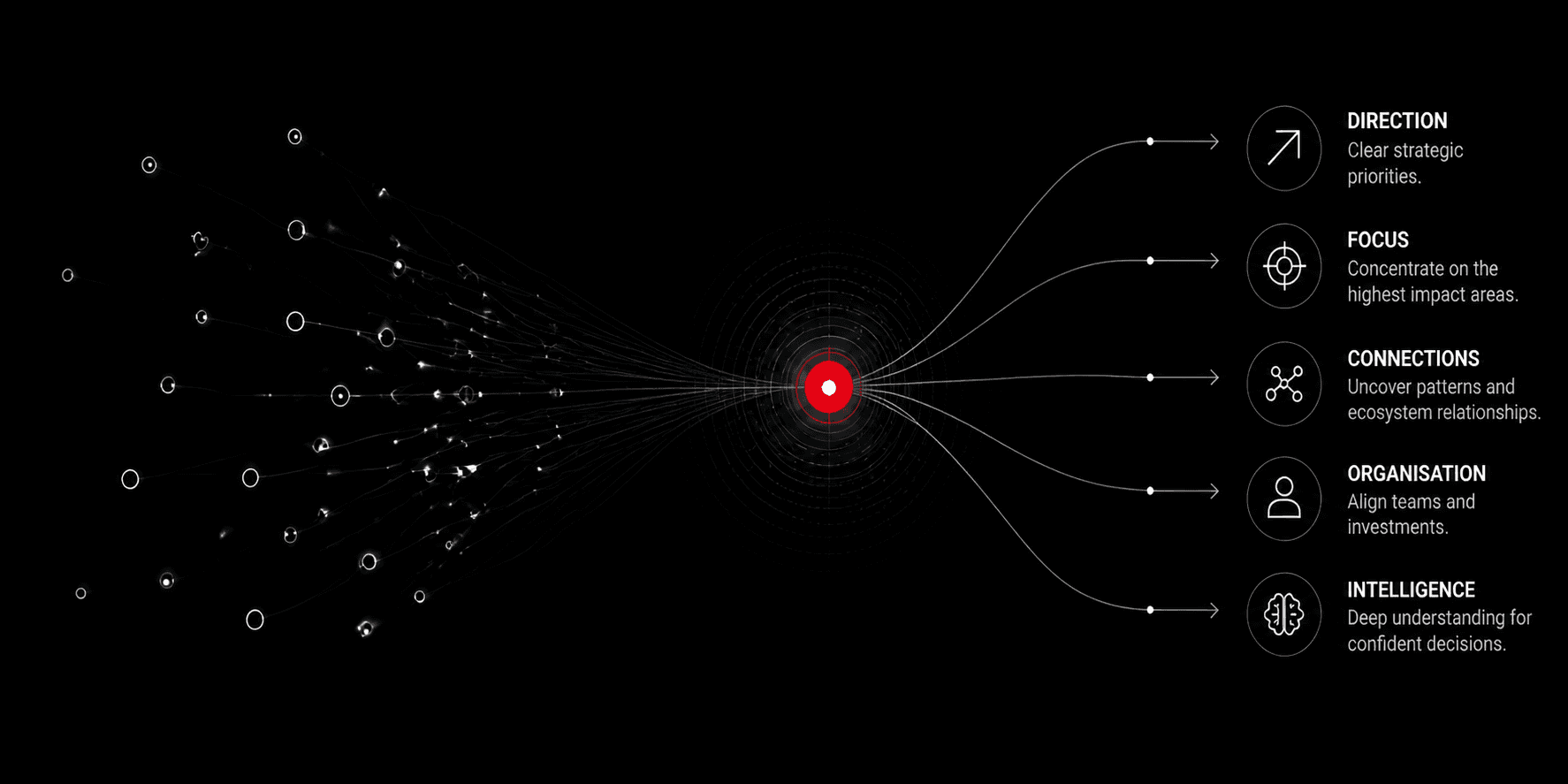
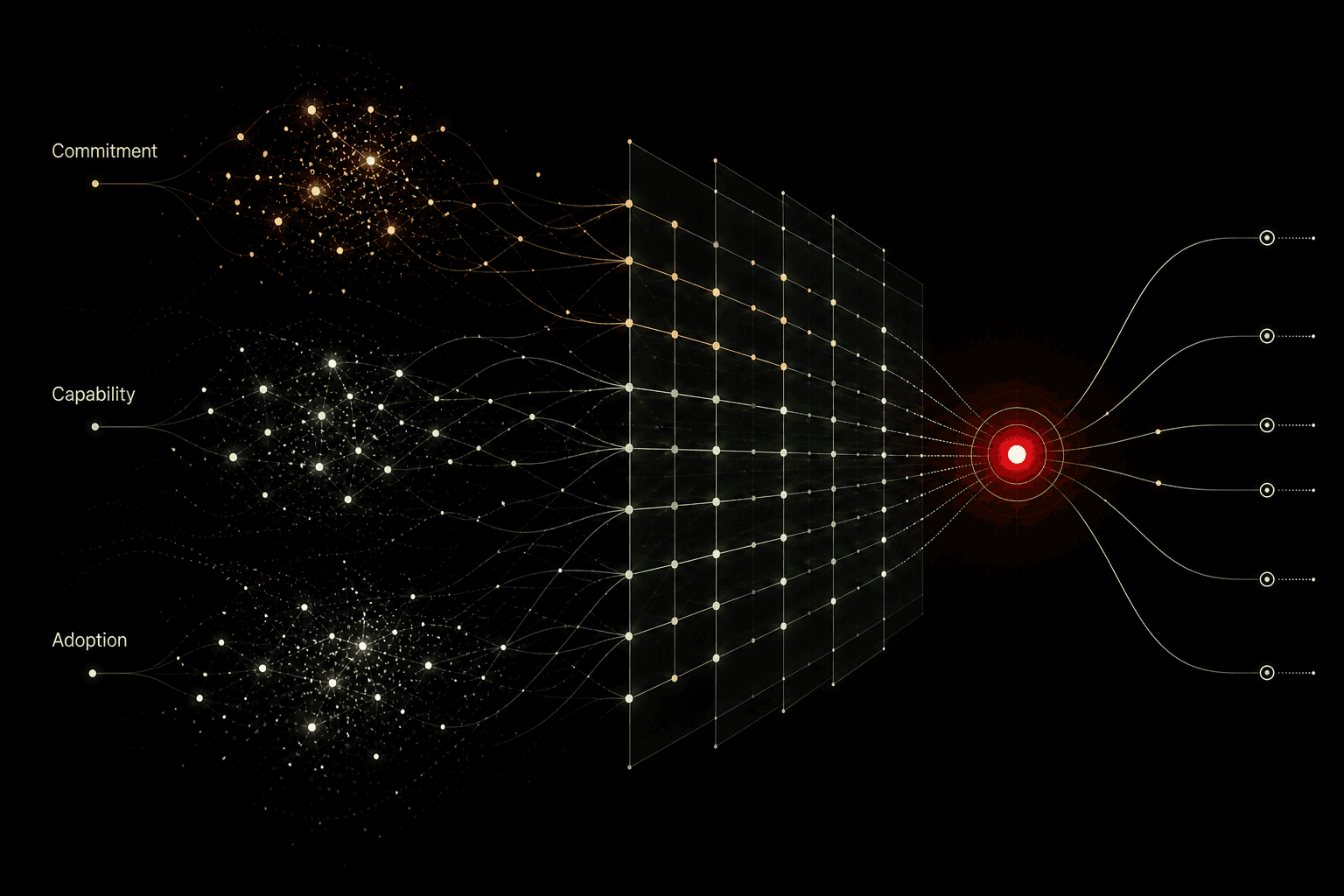
Aggregating early signals into validated H1 systems — turning research and exploration into actionable, strategic decisions.
IMPACT: Ideas became validated systems — reducing risk before scaling into delivery.
Thesis
Innovation doesn’t fail because of ideas. It fails because opportunities aren’t structured into repeatable systems.
Problem
Most organisations generate initiatives and pilot projects, but they appear as: ○ Scattered H3 research signals ○ Isolated H2 capabilities ○ Unvalidated concepts And they surface: ○ Outside delivery pipelines ○ After decisions are made ○ Without clear prioritisation Result: Decisions are reactive, not strategic. Innovation stalls.
Shift
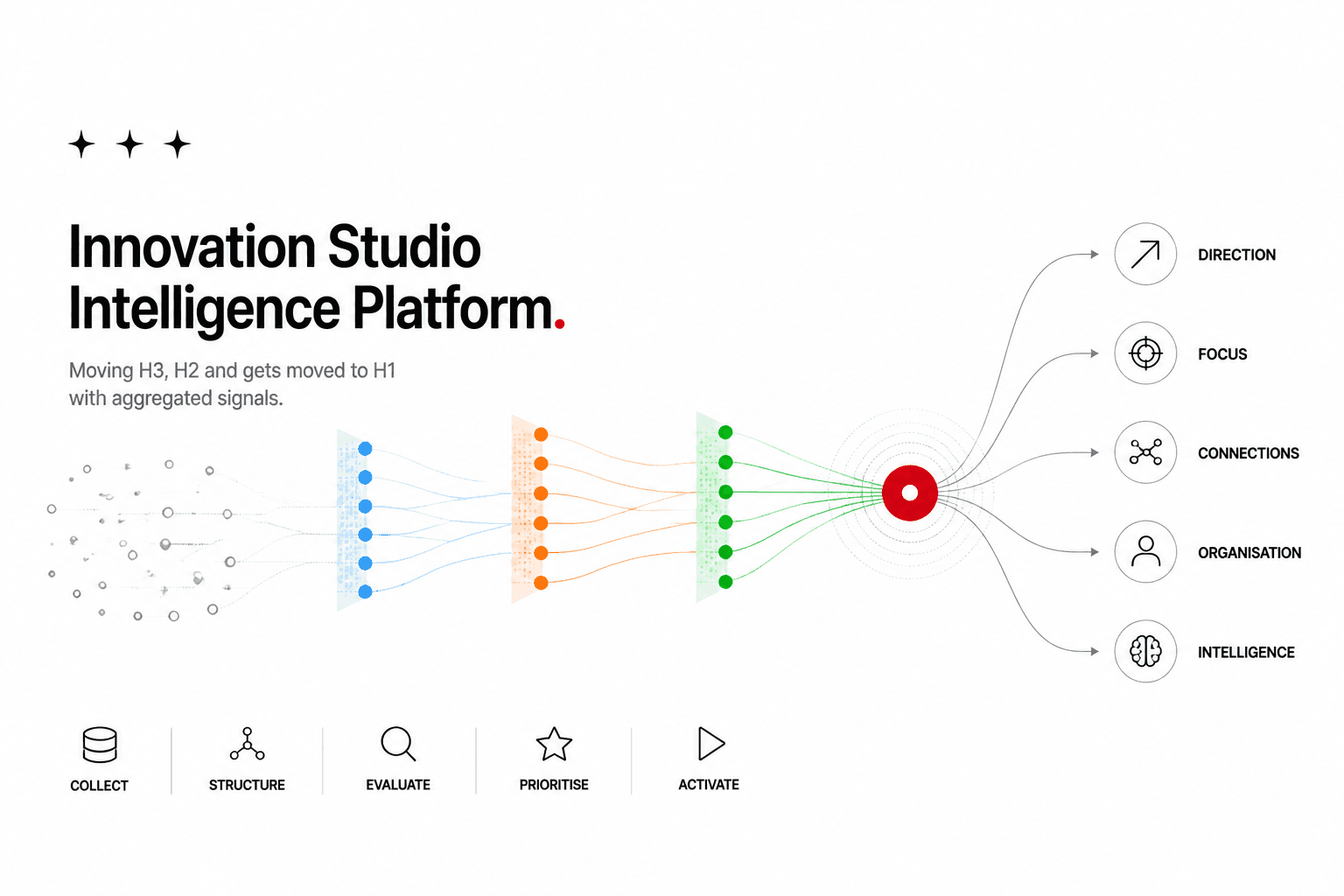
The question changed: From “Which ideas are interesting?” To “Which opportunities are validated and ready to progress?” The platform ensures: ○ H3 signals flow into H2 capabilities ○ H2 capabilities converge into validated H1 systems ○ Decisions are based on structured, actionable intelligence
Proof
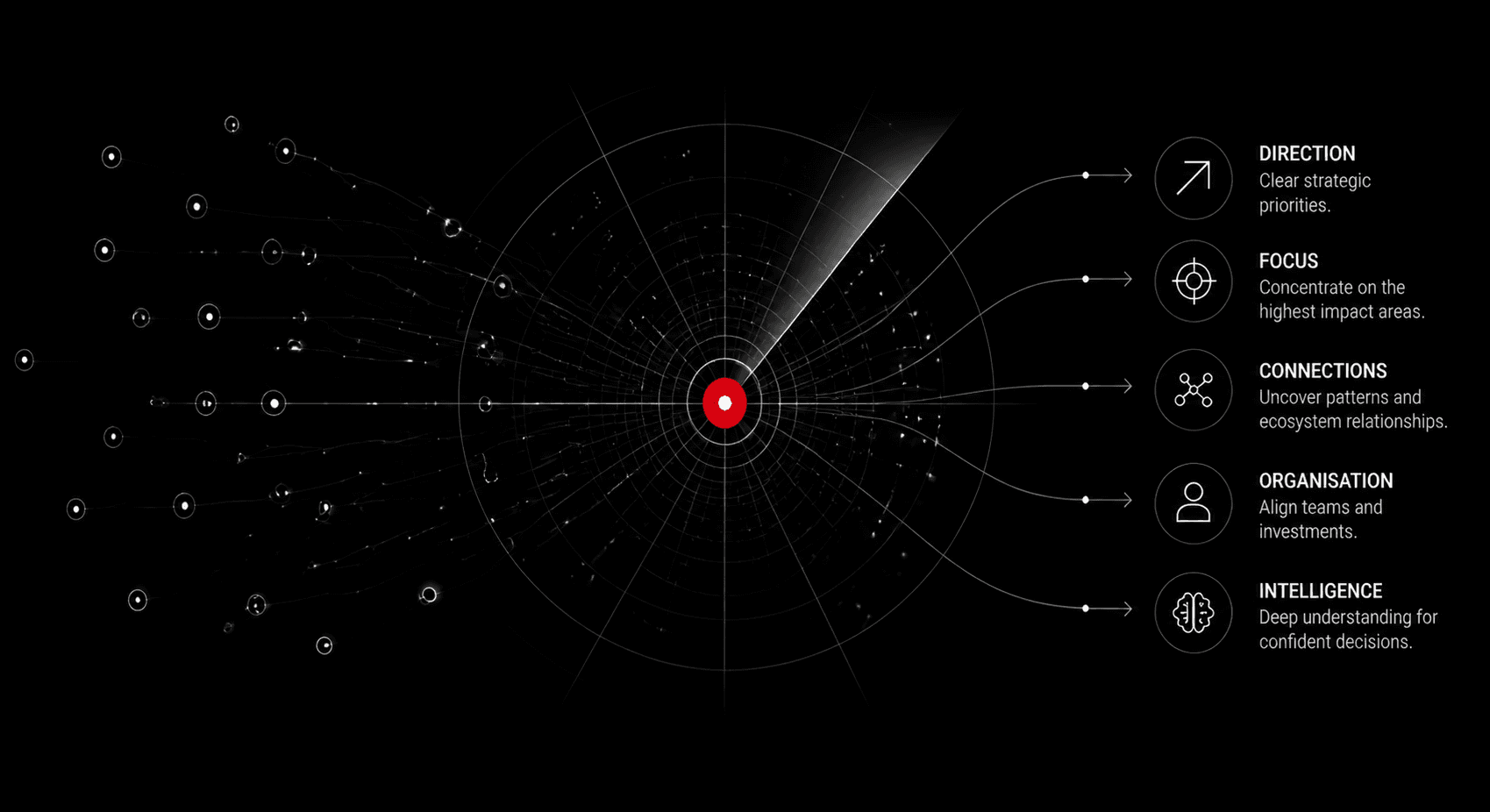
Early deployments showed: ○ Faster, repeatable decision-making ○ Clearer alignment between research, capabilities, and outcomes ○ Prioritisation of initiatives with the highest strategic value As it matured: ○ Ideas moved faster ○ Validation became repeatable ○ Transition to H1 became clearer
Outcome
Innovation stopped being exploratory only. It became a system for progression, validation, and strategic deployment.
What This Enables
It no longer asks: “Is this interesting?” It asks: “Is this ready to move forward?” Shift from: ○ Ideas → Systems ○ Exploration → Validation ○ Uncertainty → Confident Decision
System Shift
The platform structured the innovation pipeline: ○ Aggregating research and capability signals ○ Defining transition criteria from H2 → H1 ○ Linking early signals directly to strategic action This changed how innovation was managed — from exploration to progression.
Shivani S Soni
System
Portfolio
Systems designed to shape how decisions are made in design, build & operate.