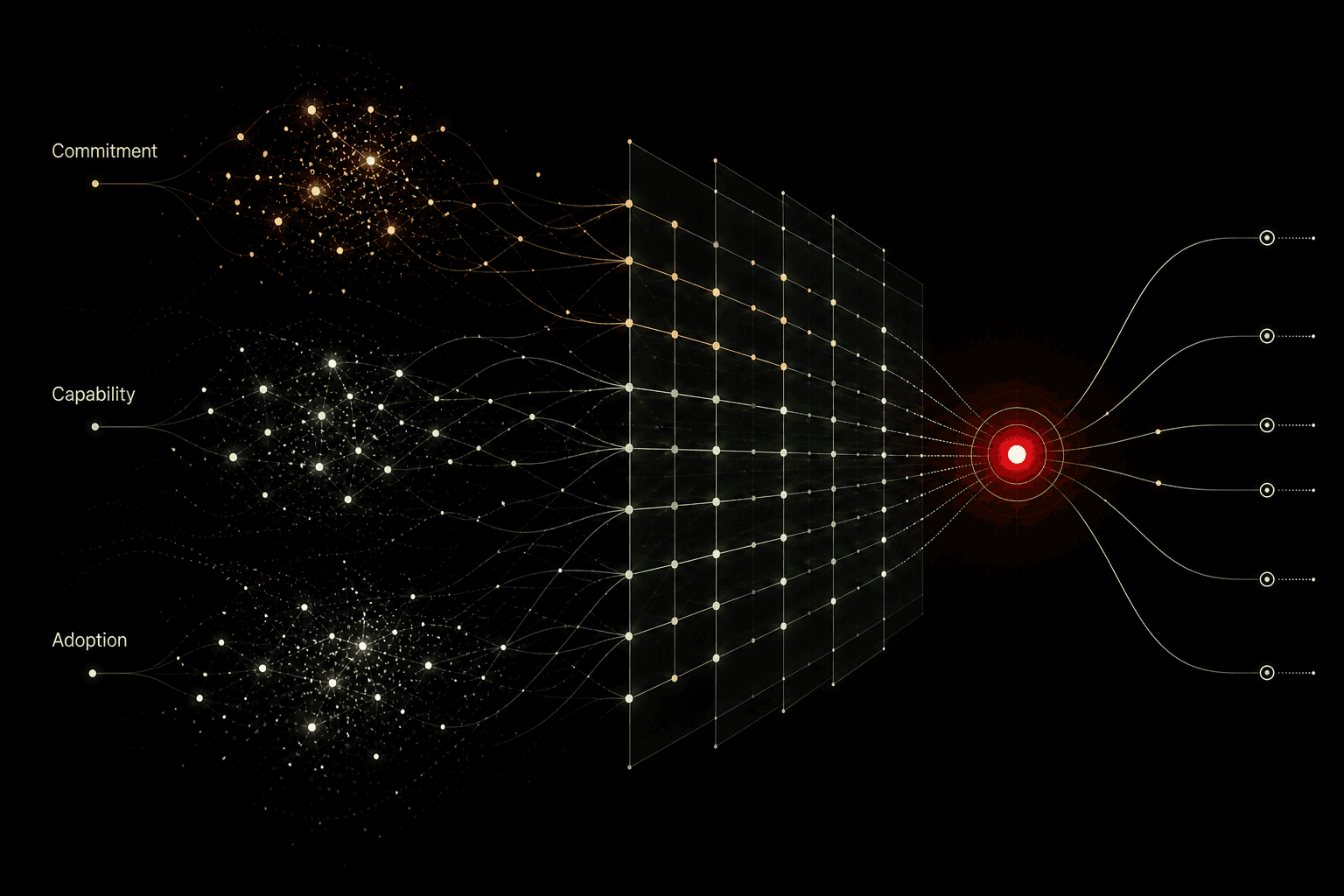
Human-Centric
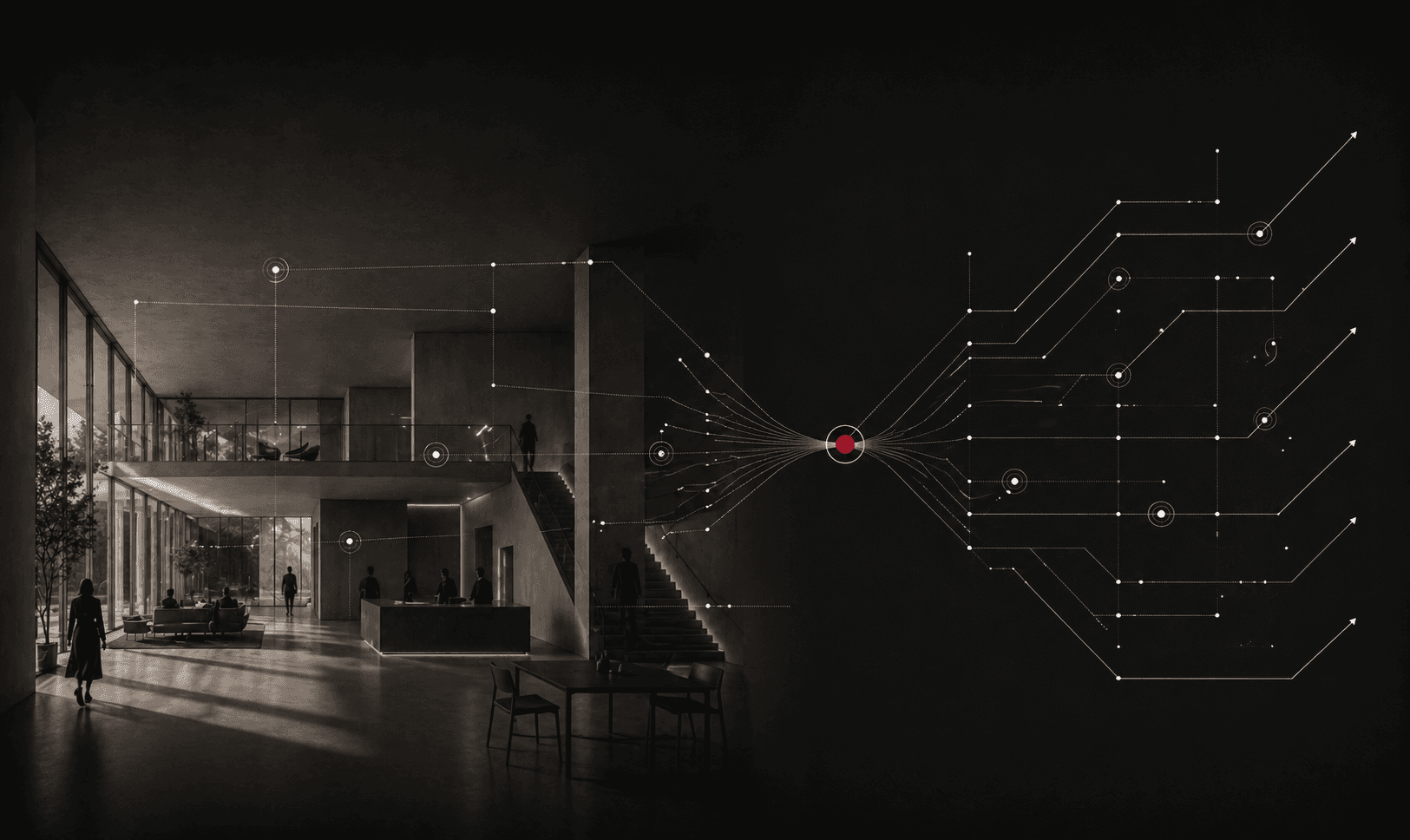
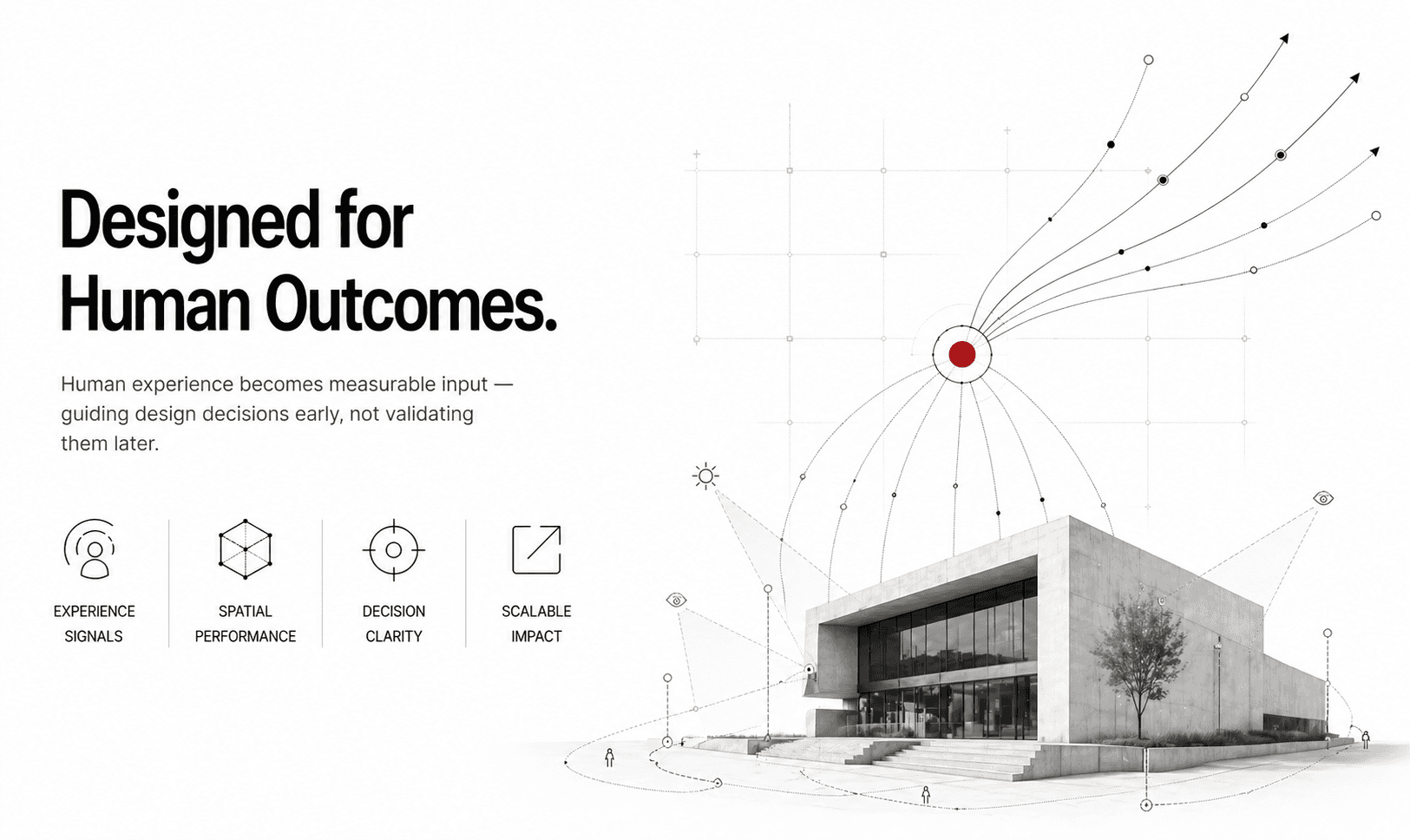
Human experience becomes structured input — guiding decisions early, not validating them later.
Applied across early-stage design workflows — translating spatial experience into measurable, comparable signals. Structured. Comparable. Actionable.
Thesis
Design shapes behaviour — but behaviour rarely shapes design decisions. Human experience is: ○ qualitative ○ subjective ○ hard to compare So it gets excluded.
Problem
In most workflows, experience shows up late — as feedback, judgement, and post-design evaluation It appears: ○ after decisions are made ○ without structure ○ without comparability So it doesn’t guide design. It reacts to it.
Shift
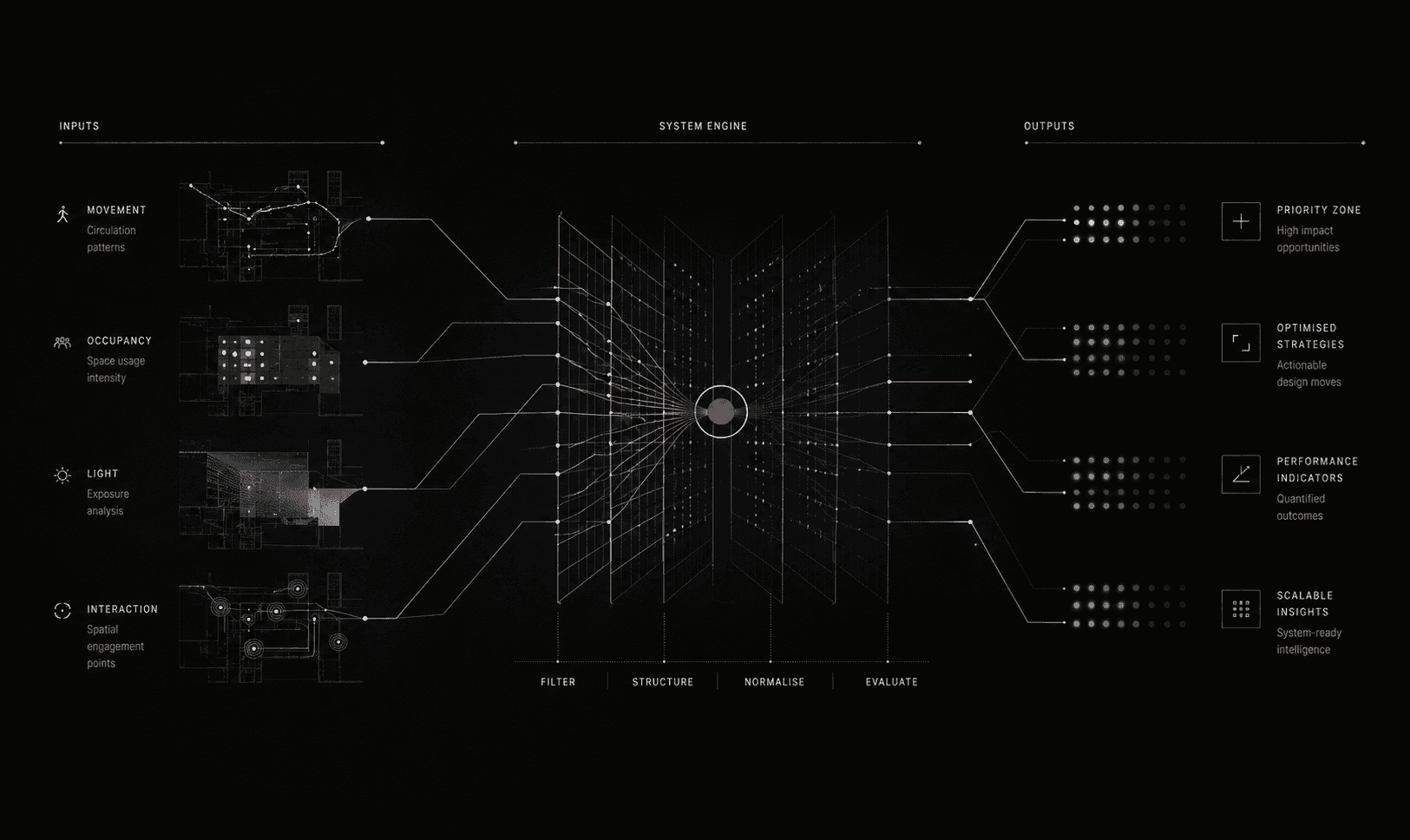
The question changed. Not: “Does this feel right?” But:“What experience does this design create?” So experience was translated into: ○ measurable spatial signals ○ comparable inputs ○ decision drivers Not something you review. Something you design with.
Proof
Applied in live projects: ○ informed spatial decisions earlier ○ enabled comparison of experience across options ○ reduced reliance on subjective judgement As it matured: ○ decisions moved upstream ○ consistency increased ○ design clarity improved
Outcome
Human experience became actionable. Not abstract. Not subjective. Structured. Comparable. Actionable. It became part of how decisions are made — not something assessed after.
What This Enables
It no longer asks: ‘Does this feel right?’ after the fact. It becomes: “What experience does this create?” This shifts the model: ○ from subjective → structured ○ from feedback → input ○ from late → early And critically: from isolated judgement → scalable decision-making
System Shift
Experience → structured → comparable → actionable decisions This required turning human experience into signals: ○ linking spatial conditions to outcomes ○ enabling comparison across options ○ embedding into early-stage workflows Defined early. Not interpreted later.
Shivani S Soni
System
Portfolio
Systems designed to shape how decisions are made in design, build & operate.